Sonbhadra: The Uttar Pradesh government is running a landmark, long-term campaign to promote the cultivation and wider use of “Shree Anna” — the traditional, nutritious, climate-resilient millets that include bajra, jowar, ragi, sawan, kodo, kutki, and madua. Under the state’s “Uttar Pradesh Shree Anna (Millets) Revival Programme,” production, processing, value addition, and marketing of these crops are getting an unprecedented push. The goal of this statewide initiative is twofold: lift the incomes of small and marginal farmers, and steer the state’s population toward better nutrition and healthier living.
In line with Prime Minister Narendra Modi’s vision, these age-old coarse grains — long part of India’s farming heritage — were given the name “Shree Anna,” a rebrand that’s helped India’s nutrition traditions gain fresh global recognition while supporting environmental conservation and the rural economy. Millets matter most in India’s rural landscape, where they touch the lives of more than 2.5 crore farmers. Since the United Nations declared 2023 the “International Year of Millets,” these indigenous crops have found direct access to international markets and fairer prices, further strengthening the rural economic base.

A particularly heartening example of this push — driven by the state’s efforts to make rural women financially independent — has emerged from Sonbhadra district. Sanju Kushwaha, 41, a resident of Majhigaon Chaubey hamlet under Sajaur gram panchayat in Robertsganj block, has built a remarkable model of self-reliance through millet processing. Her story shows just how much real change welfare policies can bring when they’re actually put into practice on the ground.
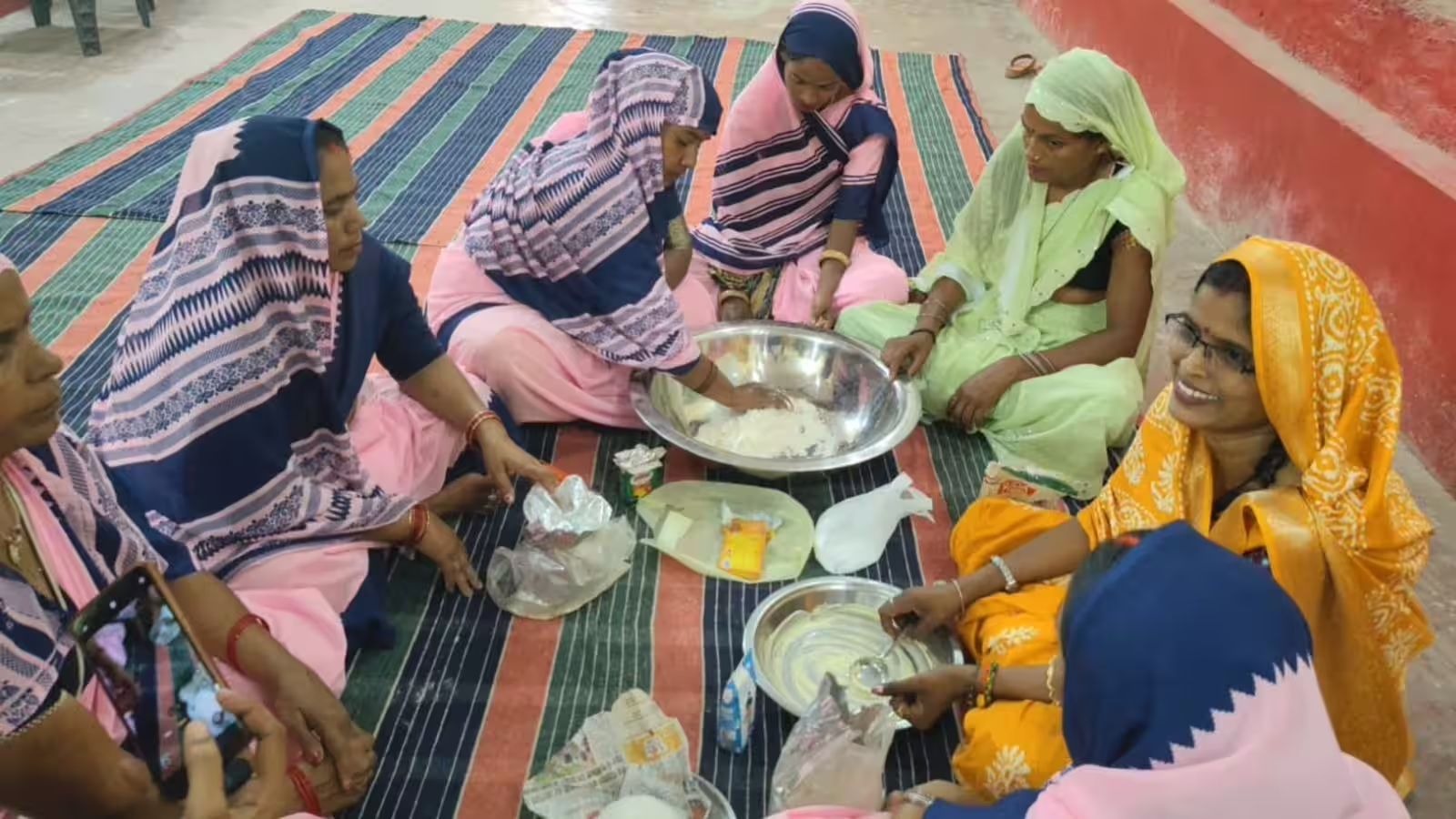
Sanju’s journey began in 2020, when she joined the National Rural Livelihood Mission (NRLM). From there, she took part in various farmer and entrepreneurship training programmes run by the district administration and state government, where she learned modern techniques for food processing and making millet-based nutritious products. After completing her training, she received a starting loan of ₹20,000 from NRLM in December 2024 and began making millet cookies, biscuits, laddoos, and namkeen on a small scale, right out of her home.
The early days weren’t easy — production, packaging, and marketing all posed real challenges — but she stuck with it, focusing relentlessly on purity, natural taste, and quality. That consistency paid off: demand for her products grew quickly in the local market, and her millet-based snacks soon became a favourite among consumers. Inspired by her success, eight other women from the village joined her self-help group (SHG) and became part of the venture.
Today, the whole group runs the millet processing and packaging operation with real skill and professionalism. Each woman in the group now earns an average of ₹10,000 a month. Sanju herself, after covering all raw material and business costs, nets more than ₹20,000 a month — earnings that have transformed her family’s standard of living and standing in the community.

The family that once struggled under financial stress is now secure and self-sufficient. Where feeding three children was once a daily struggle, Sanju’s eldest daughter is now pursuing higher education in Lucknow, and her other two children are also getting a good education. Looking ahead, Sanju plans to invest in modern machinery to scale up production and take her pure “Shree Anna” products into bigger regional and national markets.
Shree Anna isn’t just a path to economic independence — it’s also a natural safeguard for both agriculture and health. The crop thrives with very little water, in poor soil, with minimal fertilizer, and even in harsh weather, making it a model of eco-friendly, sustainable farming. Rich in protein, fibre, iron, calcium, and essential micronutrients, it’s a genuine superfood — and health experts say including it in daily diets is proving effective in warding off lifestyle diseases like diabetes and heart problems.
To support this broader push, the state government is running farmer training programmes across all development blocks, offering transparent distribution of improved seeds, technical guidance, and direct subsidy support. To strengthen the farm sector and create new employment opportunities for youth and women, Farmer Producer Organisations (FPOs), self-help groups, and innovative entrepreneurs are also being given seed capital of up to ₹4 lakh per FPO for millet seed production.
The state is also offering subsidies of up to 50 percent to encourage the large-scale setup of millet processing and packaging centres, along with financial support for “Millets Mobile Outlets” and “Millets Stores” to boost local demand and make pure products easily accessible. To protect the next generation from malnutrition, Shree Anna has also been given priority in mid-day meals and the Public Distribution System (PDS).
In Sonbhadra, Sanju Kushwaha and her group’s achievement stands as proof of how the state government’s welfare policies are improving lives at the grassroots level. Backed by statewide campaigns like the “Shree Anna Mahotsav” and forward-looking schemes, Uttar Pradesh isn’t just becoming the country’s leading state in millet production — it’s quietly driving an economic revolution in rural areas, one that promises new prosperity for farmers and women entrepreneurs alike.







 ---------------------------------------------------------------------------------------------------